
Quick answer
Swimming with dolphins in the wild is illegal in Tenerife under Spanish and European Union wildlife protection regulations. Approaching, touching, or entering the water with cetaceans carries fines and disrupts natural behavior patterns critical to feeding and social structures. Licensed observation tours operate under strict distance protocols that allow viewing without interference.
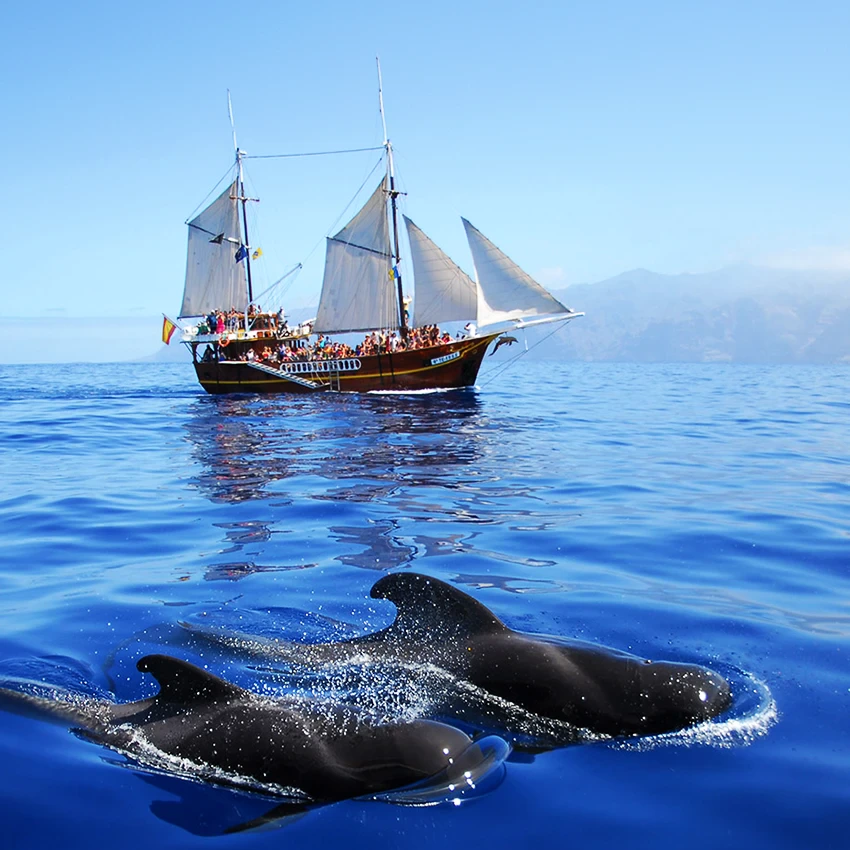
Tenerife sits within the Canarias Marine Biosphere Reserve, a UNESCO-designated zone protecting 19 resident cetacean species. The legal prohibition on swimming with wild dolphins stems from decades of marine biology research documenting stress responses when humans enter cetacean habitat. Bottlenose dolphins rely on echolocation for navigation and hunting; recreational swimmers generate acoustic interference that forces pods to abandon feeding grounds or alter migration routes. The question of whether you can swim with dolphins in Tenerife arises frequently because commercial dolphin swim programs operate in other regions. Canary Islands law treats all cetaceans as protected wildlife requiring non-contact observation. Captive dolphin facilities do not exist in Tenerife, and importing marine mammals for entertainment purposes violates national conservation mandates established in 1995. Operators offering "dolphin encounters" that involve water entry face license revocation and prosecution under Article 54 of Spain's Natural Heritage and Biodiversity Law. Responsible whale and dolphin watching in Tenerife follows the Blue Boat certification standard, which mandates 60-meter minimum distances, engine speed limits in cetacean zones, and maximum observation durations of 30 minutes per pod. Morning departure windows between 09:00 and 14:00 align with calm sea conditions that improve sighting success while minimizing vessel impact. Costa Adeje, Puerto Colón, and Los Cristianos serve as primary departure harbors for year-round observation trips. Visitors seeking close dolphin interaction often confuse observation tours with swim programs marketed in Caribbean or Southeast Asian destinations. Tenerife's regulatory model prioritizes population health over tourism revenue. Pilot whales, the archipelago's most frequently sighted species, exhibit matriarchal social structures vulnerable to human disruption. Enforced distance protocols allow behavioral observation—breaching, spy-hopping, synchronized swimming—without the physiological stress measurable through cortisol sampling studies conducted by Canary Islands universities since 2004.
“Spanish environmental law treats all cetaceans as protected wildlife requiring non-contact observation, with no exceptions for recreational swimming.”
Why You Cannot Swim With Dolphins In Tenerife
Misconceptions about interacting with marine life in Tenerife often stem from outdated imagery and unverified social media content. It is essential to distinguish between professional observation and illegal contact.
MythYou can pay to swim with dolphins in the wild.
FactSwimming with dolphins in the wild is illegal in Tenerife to ensure marine welfare.
MythBoat tours allow passengers to enter the water with dolphins.
FactRegional wildlife conservation laws strictly prohibit swimming with or feeding wild cetaceans.
MythInteraction is permitted if the dolphins approach the boat.
FactBoats must maintain a legal distance from animals; any intentional water entry is prohibited.
Best Time For Whale And Dolphin Watching In Tenerife
The best arrival window for whale and dolphin watching is 09:00–14:00. Morning tours are preferred as they typically provide calmer sea conditions and improved wildlife visibility.
Spring (March–May)
Moderate visitor numbers20°C to 24°C; stable conditions. Migratory patterns often increase sightings during these months.
Summer (June–August)
High visitor numbers24°C to 28°C; calm seas. Consistent wildlife activity is observed throughout the season.
Autumn (September–November)
Lower visitor numbers22°C to 26°C; pleasant climate. Reduced boat traffic often facilitates quieter observation.
Weekday mornings
Low crowd density—; Morning hours generally feature the most favorable maritime conditions.
Verdict: The optimal time for observation is between 09:00 and 14:00 during the months of April or October.
Rules For Observing Dolphins In Tenerife
Tenerife enforces strict wildlife protection laws to preserve marine ecosystems. All dolphin-watching operators must hold 'Blue Boat' certification and maintain legal distances from cetaceans.
Do
- Choose operators displaying the official Blue Boat flag
- Maintain minimum 60-meter distance from dolphins at all times
- Keep noise levels low to avoid disturbing marine wildlife
- Report any operators breaching distance or approach regulations
- Follow crew instructions regarding movement and positioning on deck
- Switch off flash photography when marine mammals are visible
Don't
- Never attempt to swim with or touch dolphins in Tenerife waters
- Don't feed marine wildlife or throw objects into the water
- Avoid booking with operators lacking Blue Boat certification
- Don't lean over railings or make sudden movements near animals
- Never use drones near dolphins without explicit maritime authority permission
- Don't charter boats lacking proper cetacean-watching permits
Entrance Fee And Costs For Dolphin Watching Tours
There is no cost to access the ocean, and swimming with dolphins in the wild is illegal, meaning the entrance fee is 0 EUR. Costs for visitors instead relate to regulated boat-based observation tours.
A typical adult pays between 40 EUR and 70 EUR for a regulated observation tour, with prices depending on the vessel type and tour duration.
Check availability
Common questions about can you swim with dolphins in Tenerife
Everything you need to know about can you swim with dolphins in tenerife